
.svg)

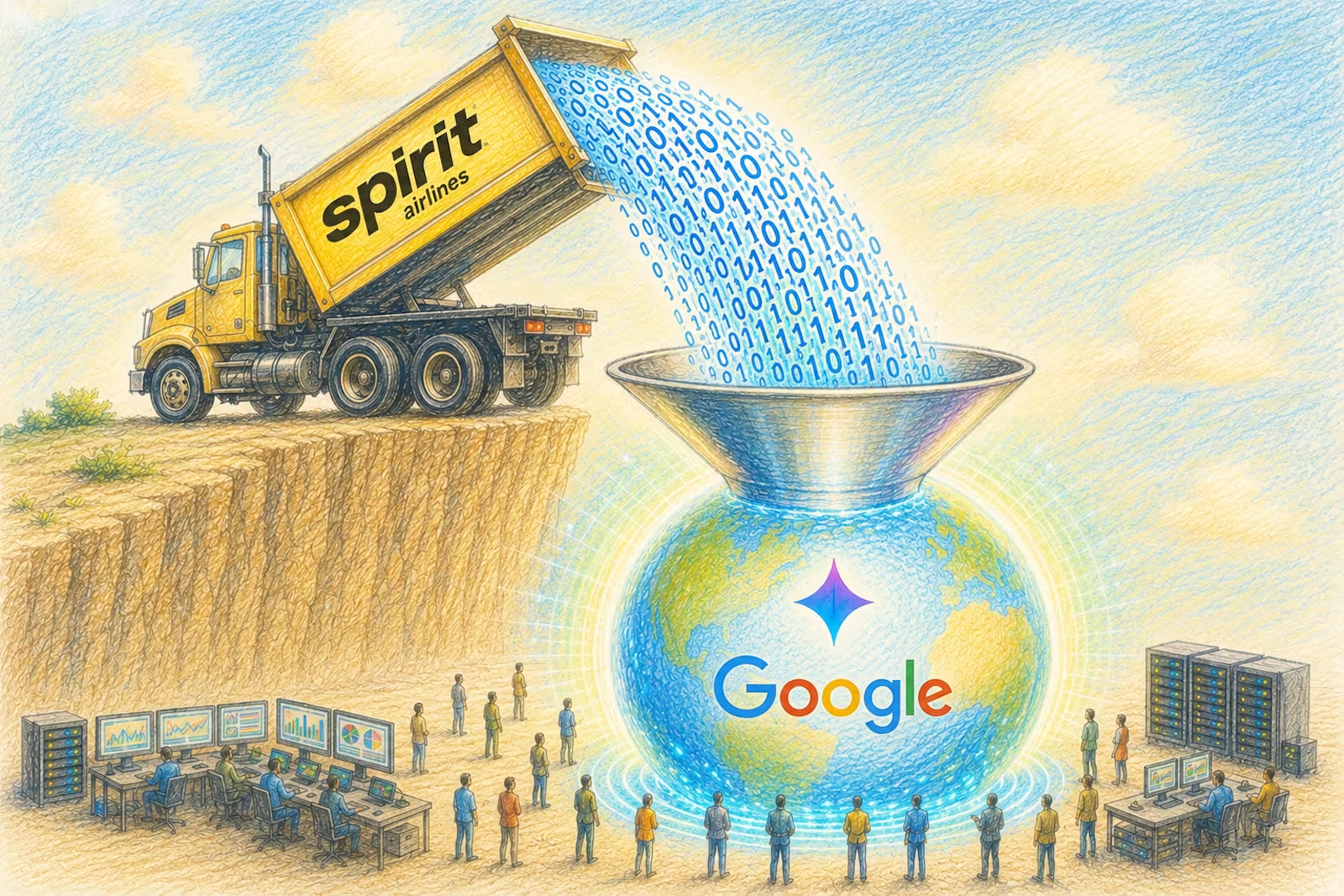

Not Spirit's planes. Not its slots at major hubs. Not its 97.5 million passenger records (those were excluded from the deal).
It bought the back office. Roughly 100 million employee emails, 500 million Teams messages and pricing data on 7.2 billion competitor flights. Source in the comments.
Mercor, an AI data company bid $7.5 million for the same thing. Google went to $10 million and won.
The public internet has been scraped. What hasn't been scraped is how work actually gets done inside a company. How are pricing calls considered and made? How does operational failure get escalated, and who pushed back and importantly why? It's this streetwise operational know how that's never been on a website. It's the most valuable training material left.
So we now have a market rate. One mid-size company's operational knowledge, sold in open court after the company was already dead.
Your company is still trading. Your data is current, sector-specific and complete. So it's worth asking what's actually protecting it. For most enterprises the answer is a no-training clause, procured the way software gets procured and then never revisited. It's a promise about intent, and not a constraint on what's possible.
The alternative isn't a better clause. It's not needing one. Open-weight models running in your environment. An orchestration layer you own with your prompts, your workflows and your institutional knowledge. Models get swapped as the frontier moves, but your operational memory stays put.
Spirit's institutional knowledge outlived Spirit. It's raw material for a model that everyone, including its former competitors, will now rent and explore by the token.
Author: Tod Pedler





.avif)


.avif)

.avif)